

The city was filled with "worldly trophies"
Since when did luxury become so obsessed with over-reliable symbols?
The "Book Tote," created by Dior during the Maria Grazia Chiuri era, was once a status symbol for women in Minato Ward and similar districts
However, I also felt as if, before I knew it, it had degenerated into a "worldly symbol" far removed from sophistication
The oblique pattern on canvas fabric had become a trophy for sugar dating and night work, whether you were browsing the nightlife scenes of Roppongi or Kabukicho, or simply checking your social media feed
However, I also think this symbol is a phenomenon limited to certain areas of urban centers
Stepping away from the city center into the countryside, you'll find that almost no one carries a book tote bag. This canvas bag, with its stark disconnect between practicality and price, seems to have been an extremely limited and localized "trophy of desire," functioning only for a specific cluster of urban dwellers
This bag, whose context had completely worn away and which had been consumed as nothing more than a symbol, would have its fate vividly rewritten with the arrival of its new creative director, Jonathan Anderson
Redefining "Book Tote" as a true "book"
One of the major changes Jonathan Anderson made after taking the job was to redesign and redefine the BookTote product itself as a "true Book Collection for carrying real literature and stories."
During his time at Loewe, he successfully collaborated with Studio Ghibli, demonstrating his exceptional talent in fusing craftsmanship and pop culture. From "huge luxury bags for holding things" to "canvases for owning stories and aesthetics," much like how people cherish books
This new philosophy led to a collaboration with Eric Carle's masterpiece "The Very Hungry Caterpillar," which is celebrating its 50th anniversary of publication in Japan
A story that has been etched in the memories of Japanese children (and adults who were once children) for half a century. The world of that beloved picture book, enjoyed around the world, has been brought to life not through print, but through Dior's proud, exquisite, and substantial couture embroidery (craft) on canvas
Bags that were once consumed by the mundane world as "symbols of sugar dating and night work" are now imbued with genuine culture, literature, and craftsmanship—a picture book with a 50-year history—through Jonathan's hands. It was a moment when the cheap, mundane context was vividly deodorized, and the bag was elevated into a pop and cute collector's item
The beautiful poison of "The Very Hungry Caterpillar"
However, this redefinition of "a real book" contains a beautiful yet venomous irony (satire) that is typical of Jonathan Anderson
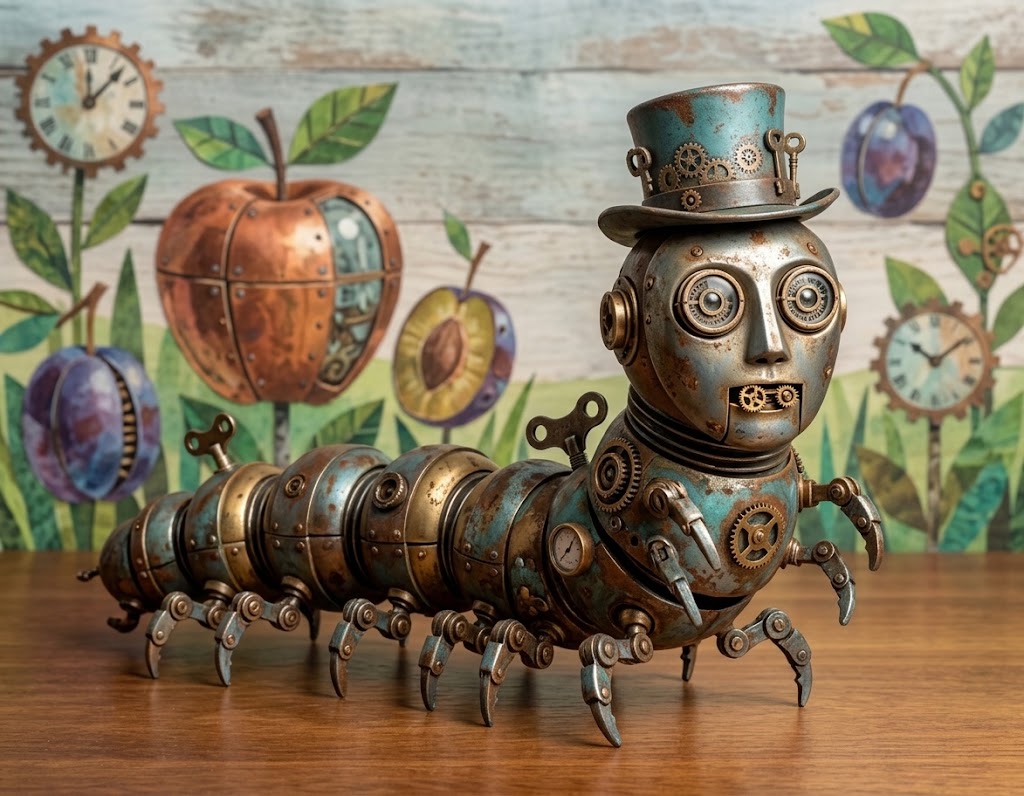
We all know the story of "The Very Hungry Caterpillar," a story loved all over the world. It's the story of a tiny caterpillar that is born and greedily devours all kinds of food, from apples and plums to cakes and sausages, gets a stomach ache, and eventually transforms into a beautiful butterfly after becoming a beautiful chrysalis
Isn't the image of the caterpillar devouring all desires a reflection of modern consumer capitalism itself ?
Consumers devour new collections, fuel their desires on social media feeds, and go on a shopping spree for high-end designer bags
The act of deliberately placing an embroidery of a caterpillar devouring everything onto a book tote bag—a "giant stomach of desire"—is both a nostalgic and endearing homage to children's books and a profoundly intelligent mirror that smiles and confronts those who indulge in the desire for luxury, saying, "You are just like this caterpillar."
The smell of 3M spray and a vivid defense
No matter how much aesthetic or satirical content it may contain as a "genuine book," the owner of this bag will face on a daily basis only the extremely physical task of "maintaining it as a physical object."
Delicate embroidery on canvas and a bright base color. If you take it out into the everyday life of Japan, it will be relentlessly attacked by the noise of everyday life such as rain, mud, hand grease, and exhaust fumes
The owner sprays the "art piece imbued with 50 years of history and satire" with 3M waterproofing spray to protect it
As the room filled with the pungent, unpleasant smell of chemicals, I shook the can and sprayed the particles evenly onto the canvas to avoid unevenness
This act involves coating the "innocent caterpillar embroidery" with a chemical waterproof film to protect it from physical dirt
The raw reality is that people who acquire an art piece that exposes the illusion of desire end up cherishing and maintaining it as an expensive industrial product they don't want to tarnish. Here again, there exists the inescapable and comical friction (noise) between criticism and ownership
At the end of our desires, can we become butterflies?
At the end of the story of "The Very Hungry Caterpillar," the caterpillar eats green leaves to settle its stomach, then transforms into a "beautiful butterfly" and flies into the sky
So, in the hustle and bustle of the city, where we devour "the food called luxury," will we, the modern people, be able to become beautiful butterflies at the end of this shopping spree?
Or will they continue to wander the feed forever, searching for a new bag (food), chasing after fictional icons that can't reach the countryside, while suffering from stomach problems?
Jonathan Anderson is probably finding this scene more amusing than anyone else, right in the back of his studio
Under the guise of creating "authentic books," which he himself orchestrated, the greedy wealthy and trend-followers pay exorbitant sums for embroidered caterpillars—a metaphor for themselves—and then gratefully carry them around, desperately defending them with 3M spray paint. He may be watching this comical caricature with a smirk on his face
The caterpillar depicted on the Dior Book Tote simply stands there, silent
With an innocent expression, as if fully aware of the mundane history of the bag it carries and the desires of the people who buy it
And now that you understand everything, how about carrying this bag with a sense of deliberate guilt?